
Now Accepting Online Bookings!
New Mexico's Plumbing, Boiler and HVAC Experts

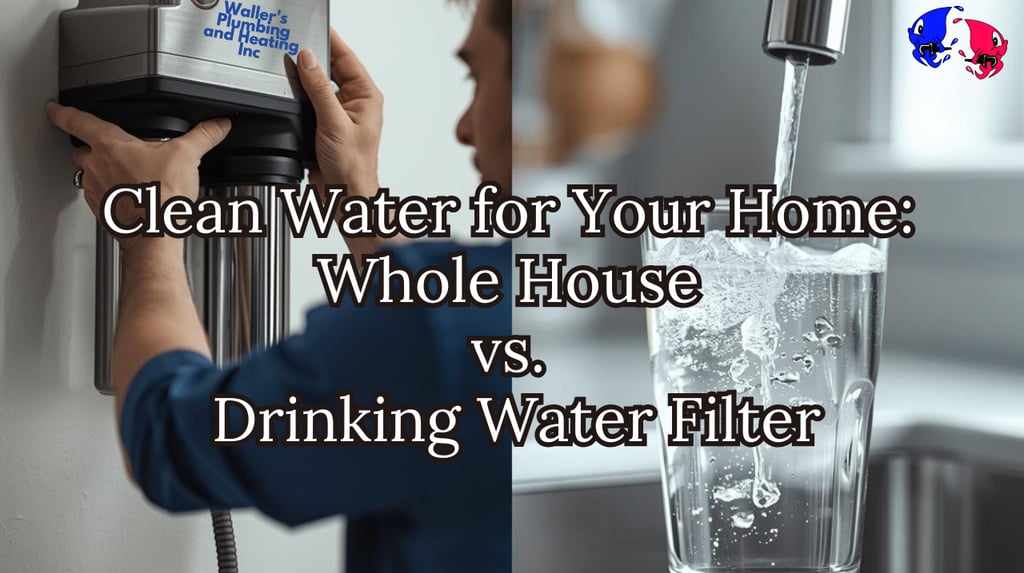
Clean Water for Your Home: Whole House vs. Drinking Water Filters
Confused about water filtration? Learn the difference between whole-house systems and drinking water filters to choose the best option for your home.
Matthew Waller
3/23/20264 min read

You fill a glass of water from the kitchen tap, but you hesitate. Does it have a faint chlorine smell? Are you worried about what you can't see, taste, or smell? Clean, safe water is a cornerstone of a healthy home, yet many homeowners have concerns about the quality of the water flowing from their pipes.
Hard water can leave spots on your dishes and scale in your coffee maker. Contaminants can affect the taste of your morning coffee and, more importantly, your family's health. The good news is that modern water filtration technology offers powerful solutions. The main question is: which solution is right for you?
The two most common options are whole-house filtration systems and point-of-use drinking water systems. They serve different purposes and offer unique benefits. At Waller's Plumbing and Heating, Inc., we help homeowners navigate these choices every day. This guide will break down the differences to help you decide.
What is a Whole-House Filtration System?
A whole-house filtration system is exactly what it sounds like. It's a system installed at the main water line where it enters your home. This means that every drop of water—from your kitchen sink and shower to your washing machine and toilets—is treated before it circulates through your pipes. Think of it as a gatekeeper for your home's entire plumbing network.
The Benefits of Whole-House Filtration
Installing a whole-house system is about more than just drinking water; it's about protecting your entire home's infrastructure and improving your quality of life.
Protect Your Appliances and Pipes: The biggest advantage is sediment and mineral removal. Hard water minerals (calcium and magnesium) and sediment build up inside your pipes, water heater, dishwasher, and washing machine. This scale buildup forces appliances to work harder, reduces their efficiency, and leads to premature failure. A whole-house system acts as a shield, extending the lifespan of these expensive investments.
Healthier Skin and Softer Hair: Do you struggle with dry, itchy skin or brittle hair? The chlorine used for municipal water treatment and hard water minerals can strip natural oils from your skin and hair. By filtering these irritants out of your shower water, many people notice softer skin, smoother hair, and less irritation.
Cleaner, Brighter Laundry: Hard water minerals can get trapped in the fibers of your clothes, making them stiff and causing colors to fade over time. Filtered water allows detergents to work more effectively, resulting in softer, brighter laundry with less soap.
No More Stains or Spotty Dishes: Say goodbye to those hard-to-scrub white spots on your shower doors and faucets. A whole-house system reduces the mineral content that causes limescale and soap scum, making cleaning your home significantly easier. Your dishes will come out of the dishwasher clearer, too.
What is a Point-of-Use (POU) Drinking Water System?
While a whole-house system treats all the water, a Point-of-Use (POU) system treats water at a single fixture—typically the kitchen sink. These are specialized filters designed to provide the highest quality water for consumption.
The most popular type of POU system is a Reverse Osmosis (RO) system. RO technology forces water through a semi-permeable membrane that has extremely fine pores. This process is highly effective at removing a vast array of contaminants.
The Benefits of a Drinking Water System
A dedicated drinking water system is your final line of defense, targeting the water you actually ingest.
Superior Contaminant Removal: Reverse Osmosis systems are the gold standard for purity. They can remove up to 99% of total dissolved solids (TDS). This includes heavy metals like lead, microscopic organisms, nitrates, and other chemical contaminants that more basic filters might miss.
Exceptional Taste and Odor Control: If your primary complaint is the taste or smell of chlorine in your tap water, an RO system is the perfect solution. It removes the chlorine and other compounds that create unpleasant tastes, giving you water that is purer and more refreshing than many bottled water brands.
Cost-Effective and Convenient: Tired of buying bottled water? An RO system delivers on-demand, high-quality drinking water right at your sink for just pennies per gallon. It eliminates plastic waste and the hassle of lugging heavy water bottles home from the store.
Peace of Mind: Knowing that the water your family is drinking, cooking with, and using for baby formula is free from harmful contaminants provides invaluable peace of mind.
Which System is Right For You?
A Head-to-Head Comparison
The best choice depends entirely on your goals, your home's water quality, and your budget. Let’s break it down.
You should consider a WHOLE-HOUSE system if:
You have hard water. You're tired of limescale on faucets, spotty dishes, and stiff laundry.
You want to protect your home's infrastructure. You see a filter as an investment in the longevity of your water heater, pipes, and appliances.
You or your family members have sensitive skin. You want to reduce chlorine and other irritants in your shower water.
Your primary concern is sediment and scale. You notice grit in your water or see evidence of mineral buildup.
You should consider a DRINKING WATER system if:
Your main goal is the purest drinking water. You are concerned about specific contaminants like lead, arsenic, or nitrates.
Your water tastes or smells bad. You want to eliminate the taste and odor of chlorine.
You want to stop buying bottled water. Your motivation is convenience, cost savings, and reducing plastic waste.
You are on a tighter budget. A POU system is generally less expensive to install than a whole-house system and addresses the most critical need: safe consumption.
The Ultimate Solution: Using Both
For complete protection and the best of both worlds, many homeowners choose to install both. A whole-house system acts as the first stage, removing sediment and chlorine to protect the entire home. Then, a Reverse Osmosis system at the kitchen sink "polishes" the water for drinking and cooking, removing the last traces of contaminants.
Take the First Step: Test Your Water
You can’t solve a problem you don’t understand. The best way to make an informed decision is to know exactly what is in your water. A professional water quality test will reveal the hardness level, chlorine content, and presence of any other contaminants in your home's water supply.
At Waller's Plumbing and Heating, Inc., our licensed plumbers can perform a comprehensive water analysis and recommend a filtration solution tailored to your specific needs and budget. We provide professional, no-pressure advice to help you achieve the safe, clean water your family deserves.
Ready to transform your home's water? Contact Waller's Plumbing and Heating today to schedule your water quality test and get a free estimate on a new filtration system!
Connect With Us
Email: support@wallersplumbingandheating.com
Follow Us
Los Alamos & White Rock
Phone: (505) 672-3141
Rio Rancho & Surrounding areas
Phone: (505) 619-4386